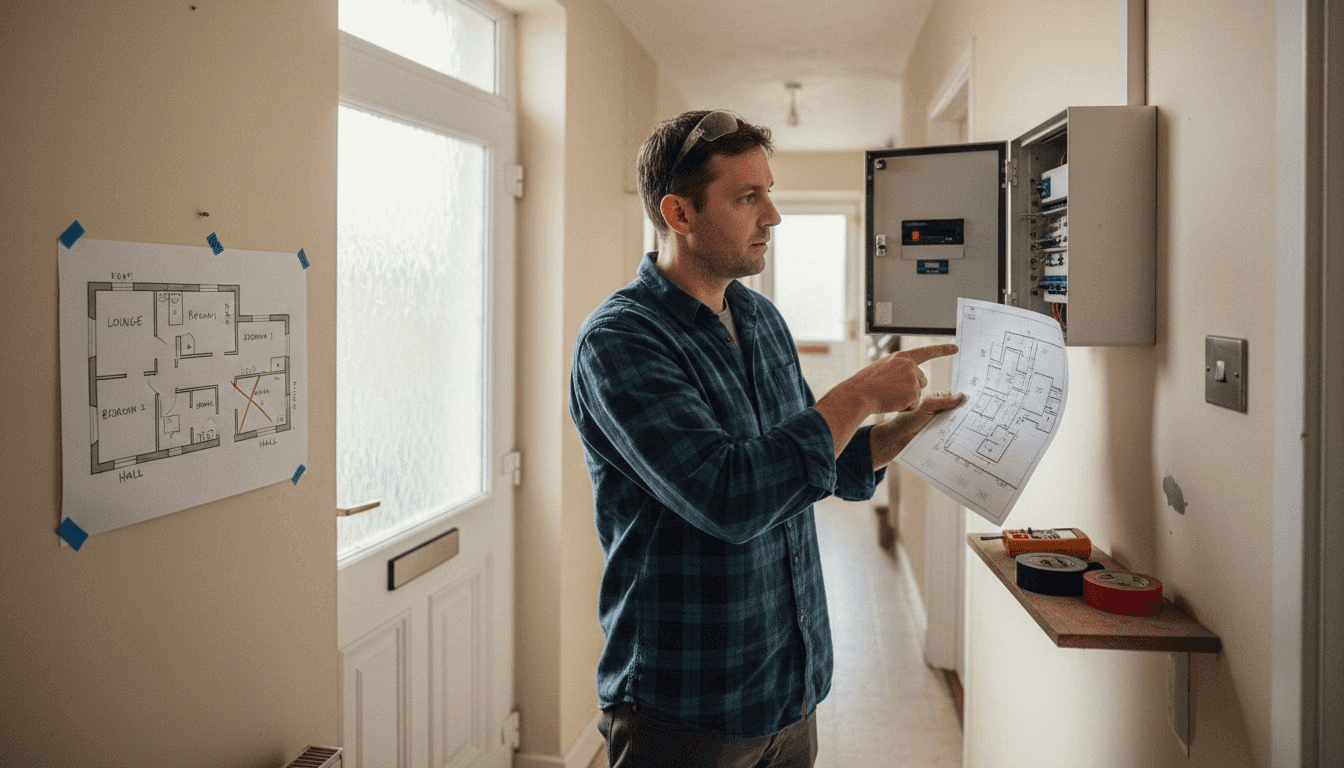
Electrical faults at home seem daunting but many are straightforward to diagnose with the right approach. This guide offers a stepwise, safe method using basic tools that empowers homeowners and landlords in Hastings to identify 80% of domestic faults result from simple causes like blown fuses or tripped RCDs. You will learn to recognise most common faults yourself, improving safety and reducing unnecessary call-out costs.
Table of Contents
- Prerequisites And Tools Needed
- Step-By-Step Fault Finding Process
- Common Faults And Symptoms
- Common Mistakes And Troubleshooting Tips
- Safety And Compliance Considerations
- Expected Results And Outcomes
- Alternative Approaches And Tradeoffs
- Get Professional Electrical Support In Hastings
- Frequently Asked Questions
Key Takeaways
| Point | Details |
|---|---|
| Systematic fault finding improves success rates by 40% | A structured approach increases diagnosis accuracy significantly |
| Basic tools can identify 80% of common faults safely | Multimeter, voltage tester, and insulated screwdrivers suffice for most tasks |
| Safety compliance with BS 7671 is mandatory | All domestic electrical work must meet UK regulatory standards |
| Typical fault finding takes 30 to 90 minutes per circuit | Time varies with fault complexity and circuit accessibility |
| Know when to escalate to professionals | Complex faults or regulatory work require qualified electrician involvement |
Prerequisites and Tools Needed
Before starting electrical fault finding, you need the right tools and foundational knowledge. Having basic electrical safety knowledge and EICR familiarity ensures you understand your home circuit layout and consumer unit.
Essential Tools:
- Digital multimeter with continuity and resistance testing
- Insulated screwdrivers rated for electrical work
- Non-contact voltage detector for live circuit checks
- Voltage tester for verifying isolation
- Torch and notepad for documentation
| Tool | Purpose | Typical Cost |
|---|---|---|
| Digital Multimeter | Measures voltage, current, resistance | £20 to £60 |
| Non-Contact Voltage Detector | Detects live circuits without contact | £10 to £25 |
| Insulated Screwdrivers | Safe handling of electrical components | £15 to £40 (set) |
| Voltage Tester | Confirms isolation before work | £8 to £20 |
You must understand your home's electrical system layout including circuit routes, consumer unit location, and safe isolation procedures. Compliance with UK standards BS 7671 and Part P regulations is non-negotiable for all domestic electrical work.
Pro Tip: Always choose tools with proper insulation rating (minimum 1000V) and certification marks like GS or VDE. Cheap uncertified tools risk electric shock and inaccurate readings.
Familiarity with your consumer unit layout saves time during diagnosis. Label circuits clearly and keep a record of which breaker controls each area. This preparation reduces fault finding time by at least 20 minutes per incident.
Step-by-Step Fault Finding Process
A stepwise electrical fault finding procedure gives you confidence and safety. Systematic fault finding improves success rates by over 40% compared to random testing.
Complete Fault Finding Procedure:
- Isolate the mains supply at the consumer unit by switching off the main switch.
- Inspect the consumer unit for tripped MCBs (miniature circuit breakers) or RCDs (residual current devices).
- Use a non-contact voltage tester on all circuits before touching any wiring or connections.
- Test each circuit individually by switching on one MCB at a time while the main switch is on.
- Identify the faulty circuit by noting which breaker trips immediately or fails to restore power.
- Isolate that circuit and use a multimeter to test continuity and resistance at outlets and switches.
- Check for visible damage like burnt connections, loose terminals, or damaged cable insulation.
- Verify repair success by restoring power and monitoring the circuit for 10 minutes.
| Step | Tool Required | Time Estimate |
|---|---|---|
| Initial isolation and inspection | None | 5 minutes |
| Circuit testing | Non-contact tester | 10 to 15 minutes |
| Fault isolation | Multimeter | 15 to 30 minutes |
| Repair verification | Voltage tester | 10 minutes |
Pro Tip: If an RCD trips repeatedly, wait 5 minutes before resetting it. Immediate resetting can mask intermittent faults and damage the device. Always retest the circuit under normal load conditions.
Progressive testing narrows down the problem area efficiently. Start broad at the consumer unit, then work towards specific outlets or switches. This method prevents wasting time on unaffected circuits and focuses effort where needed.
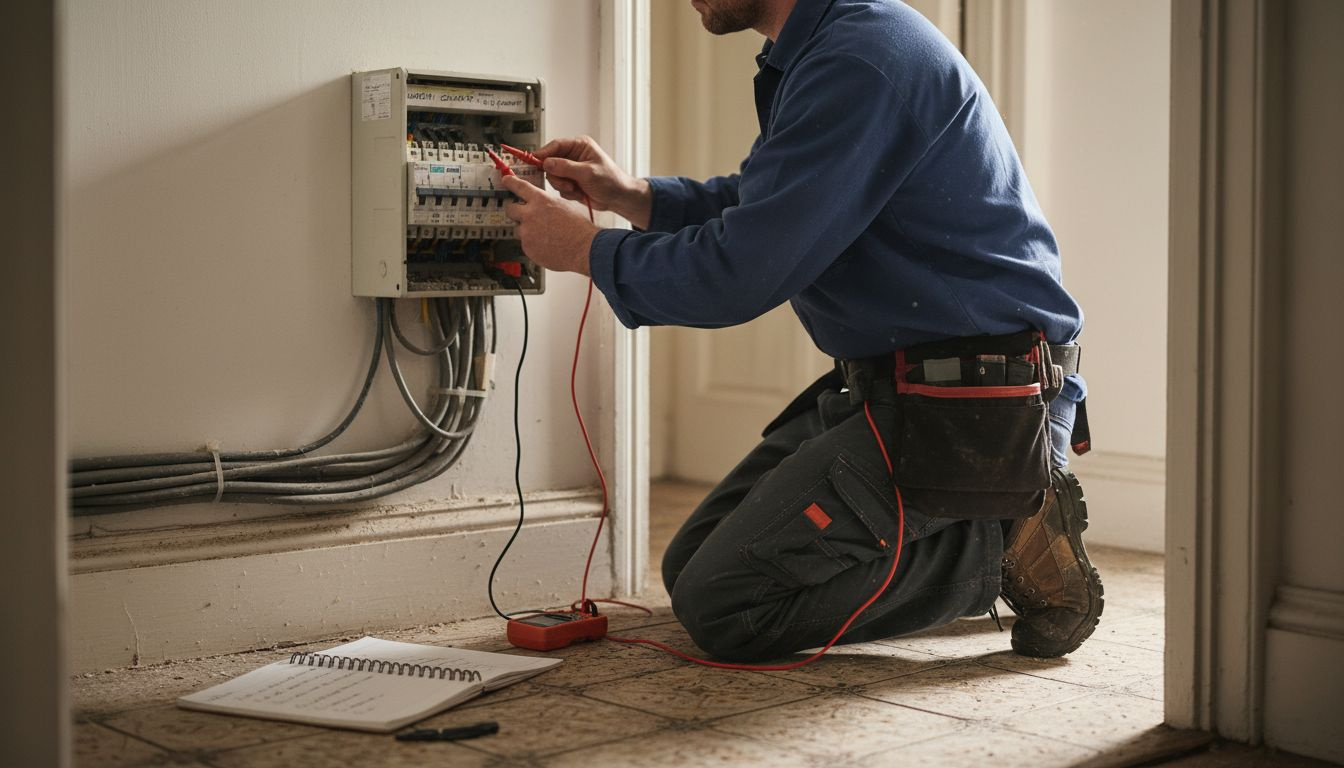
Common Faults and Symptoms
Recognising typical fault symptoms helps you identify issues quickly during diagnosis. Blown fuses and tripped RCDs are common causes of power loss and circuit failures in homes.
Frequent Domestic Electrical Faults:
- Blown fuses causing complete power loss to specific circuits or appliances
- Tripped RCDs indicating earth leakage or overload conditions
- Intermittent circuit failures often caused by loose connections or damaged cable insulation
- Total circuit dead suggesting broken neutral or live conductors
- Overloaded circuits triggering MCB trips when multiple high-power devices operate simultaneously
- Crossed or damaged wiring leading to short circuits and immediate breaker trips
Blow fuses typically result from overcurrent or short circuits. You will notice no power to affected outlets or lighting circuits. RCD trips indicate earth faults, often from faulty appliances or damaged cables. Intermittent failures are trickier because symptoms appear and disappear, usually due to loose terminal connections that make contact inconsistently.
Overloaded circuits trip breakers when the total current draw exceeds the rated capacity, common in kitchens with multiple appliances. Crossed wiring creates short circuits, tripping breakers instantly when you restore power. Identifying the symptom pattern helps you target the right diagnostic approach.
Common Mistakes and Troubleshooting Tips
Avoiding typical errors ensures safer and more effective fault finding. Testing live circuits without PPE leads to 15% of DIYers experiencing minor shocks, highlighting the importance of proper safety practices.
Critical Mistakes to Avoid:
- Never test live circuits without isolating power and wearing appropriate PPE
- Always reset RCDs properly by fully switching off then on, not just pushing the test button
- Follow systematic circuit isolation instead of guessing which circuit is faulty
- Comply with landlord EICR requirements and never bypass safety devices
- Use only insulated and certified tools with proper voltage ratings
- Do not ignore repeated RCD trips as they indicate serious earth faults
"The biggest mistake homeowners make is assuming a tripped breaker is a simple nuisance. Repeated trips signal underlying faults that require immediate investigation to prevent fire or shock hazards."
Pro Tip: Double-check isolation with a voltage tester at the point of work, not just at the consumer unit. Miswiring or backfeeding from other circuits can still present live conductors even when the breaker is off.
Guessing the faulty circuit wastes time and risks missing the actual problem. Always test methodically from the consumer unit outward. Skipping common DIY electrical mistakes and safety tips leads to incomplete diagnoses and potential hazards.
Never work on electrical systems while fatigued or rushed. Mistakes increase dramatically when you rush fault finding, especially in poor lighting conditions. Take breaks and maintain focus throughout the diagnostic process.
Safety and Compliance Considerations
Compliance with BS 7671 and Part P Regulations is mandatory for all domestic electrical work and fault finding. Understanding electrical safety and UK compliance protects you legally and physically.
Essential Safety Practices:
- BS 7671 Wiring Regulations set the standard for electrical installation safety and testing procedures
- Part P Building Regulations require notification of certain electrical work to local authorities
- Personal Protective Equipment (PPE) including insulated gloves and safety glasses prevents electric shocks
- Mandatory EICR inspections for rental properties ensure tenant safety and landlord legal compliance
- RCD testing every six months verifies protective device functionality
- Lockout procedures prevent accidental re-energisation during fault finding
PPE is not optional for electrical fault finding. Insulated gloves rated to 1000V protect against accidental contact with live parts. Safety glasses prevent arc flash injury if a short circuit occurs during testing.
Landlords must provide current EICRs for rental properties, renewed every five years or at tenancy change. Ignoring EICR requirements risks tenant safety and creates legal liability. RCD faults are particularly dangerous because they disable the primary shock protection device, leaving occupants vulnerable.
Never disable or bypass RCDs or MCBs to temporarily restore power. This practice eliminates protective functions and creates fire and electrocution hazards. If a device trips repeatedly, the fault must be identified and repaired properly before restoring normal operation.
Expected Results and Outcomes
Typical fault finding takes 30 to 90 minutes per circuit, depending on complexity and accessibility. Professional diagnosis costs range between £50 and £120 and success rates increase 40% with a systematic approach.
With basic tools and the methods outlined, you can identify 80% of common faults yourself. Success indicators include restored circuit functionality, no repeated trips, and all outlets delivering correct voltage. Use your multimeter to verify 230V AC at sockets after repair.
Expected Outcomes:
- Simple faults like tripped RCDs or loose connections resolved in 30 to 45 minutes
- Intermediate issues such as faulty outlets requiring 60 to 90 minutes
- Complex wiring faults or hidden cable damage requiring professional electrical fault finding services
- Cost savings of £50 to £120 per incident when DIY diagnosis succeeds
- Improved home safety through early fault detection and resolution
Circuit functionality return indicates successful fault finding. Test the affected circuit under normal load for at least 30 minutes to confirm stability. If the fault reappears, further investigation or professional assistance is needed.
Professional electricians bring advanced diagnostic tools and regulatory knowledge. Their expertise is valuable for complex faults, compliance certification, or when your diagnosis reaches a dead end. Weigh the cost against the time investment and safety considerations.
Alternative Approaches and Tradeoffs
Beyond basic DIY methods, advanced diagnostic tools offer more precise fault detection. Advanced professional diagnostic tools cost between £100 and £200 and are used for complex faults requiring specialised testing.
| Approach | Tools | Cost | Success Rate | Best For |
|---|---|---|---|---|
| Basic DIY | Multimeter, voltage tester | £50 to £100 | 70 to 80% | Simple faults, tripped breakers |
| Advanced DIY | Insulation tester, clamp meter | £150 to £300 | 80 to 90% | Experienced users, recurring issues |
| Professional | Thermal imaging, earth loop testers | £50 to £120 call-out | 95 to 100% | Complex faults, compliance work |
Advanced testers like insulation resistance meters detect cable degradation before complete failure. Thermal imaging cameras identify hot spots indicating overloaded connections or failing components. These tools provide precise diagnostics but require training and significant investment.
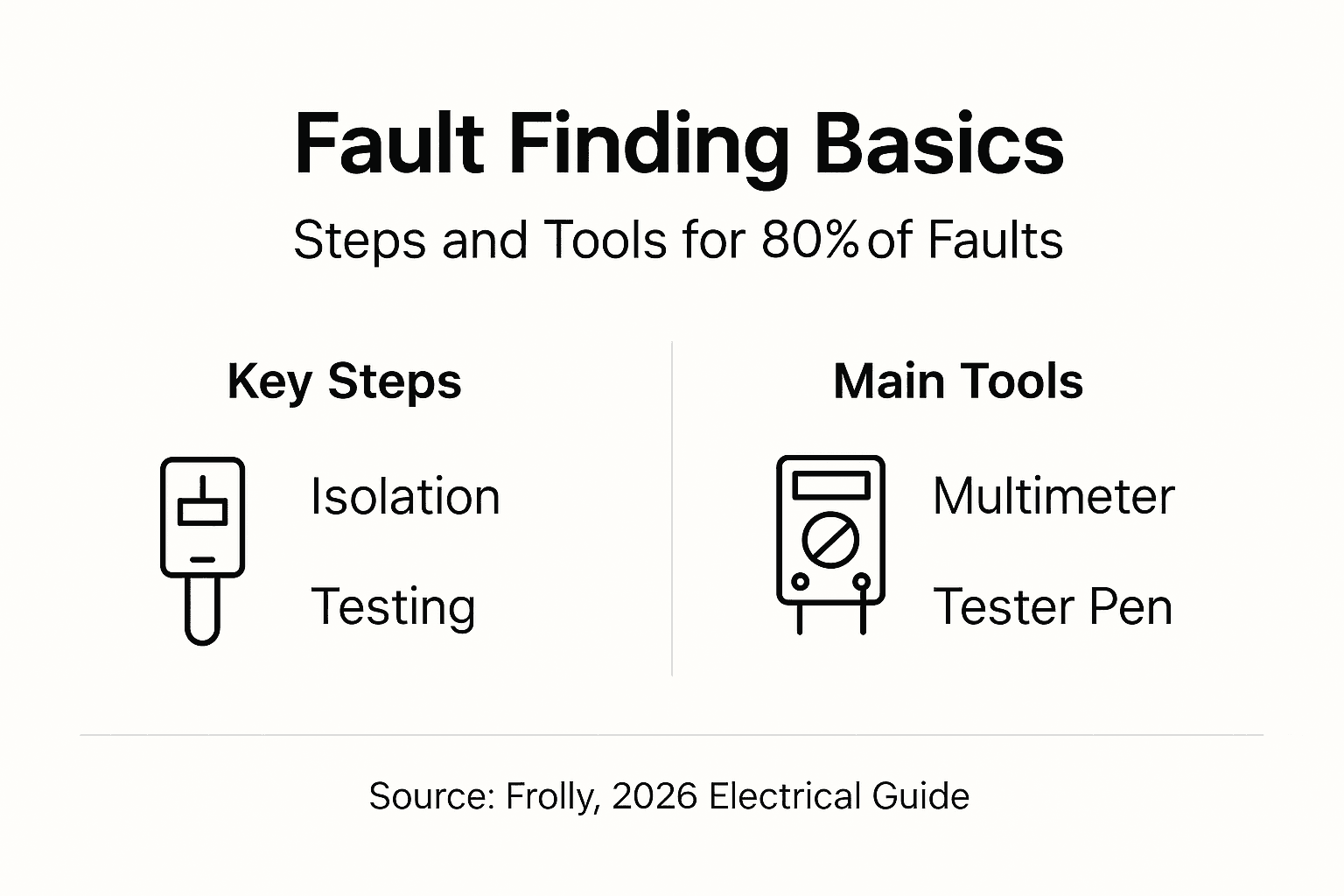
The tradeoff is between DIY time and cost versus professional expertise and speed. If you value your time at £20 per hour and spend 3 hours on a complex fault, you break even with a professional call-out. Consider advanced electrical diagnostics and EICRs when DIY efforts stall.
Know when to engage a qualified electrician. Any work requiring new circuits, consumer unit changes, or compliance certification needs professional involvement. Professional emergency electrician services provide rapid response for dangerous faults like burning smells, sparking, or total power loss.
For landlords, professional EICRs are not optional. They provide legal documentation of electrical safety and protect you from liability. Attempting to self-certify electrical work without proper qualifications violates Part P regulations and invalidates insurance.
Get Professional Electrical Support in Hastings
When DIY fault finding reaches its limits or you need compliance certification, trusted local expertise makes the difference. Frolly offers expert domestic electrician services in Hastings with certified electricians ensuring safe compliance with all UK standards.

Our team specialises in domestic electrical fault finding, repairs, and electrical installation condition reports (EICRs) for landlords meeting legal compliance. We provide emergency callout assistance and comprehensive electrical safety checklist guidance for homeowners throughout Hastings.
Contact Frolly for complex or unresolved faults, regulatory compliance work, or when you need the confidence of professional certification. Our local knowledge and domestic electrical specialisation ensure rapid, effective solutions.
Frequently Asked Questions
How often should I perform fault finding on home circuits?
You should inspect your consumer unit monthly for tripped devices and test RCDs every six months using the test button. Full circuit testing is only necessary when faults occur or during scheduled EICR inspections every five years.
Can I legally do electrical repairs myself in the UK?
You can perform minor repairs and fault finding on your own property, but notifiable work under Part P regulations requires certification by a qualified electrician. Landlords must use registered professionals for all electrical work on rental properties.
What PPE is essential for safe fault finding?
Insulated gloves rated to 1000V, safety glasses, and non-conductive footwear are essential. Always use insulated tools and a voltage tester to verify isolation before touching any electrical components.
When should I stop DIY and call a professional?
Stop and call a professional if you encounter burnt wiring, cannot locate the fault after 90 minutes, need compliance certification, or feel uncertain about safety at any point. Complex faults and regulatory work always require qualified electricians.
How can I tell if an RCD is faulty?
Press the RCD test button monthly; it should trip immediately. If it fails to trip, trips without pressing the button, or trips repeatedly with no fault present, the RCD is faulty and requires immediate replacement by a qualified electrician.