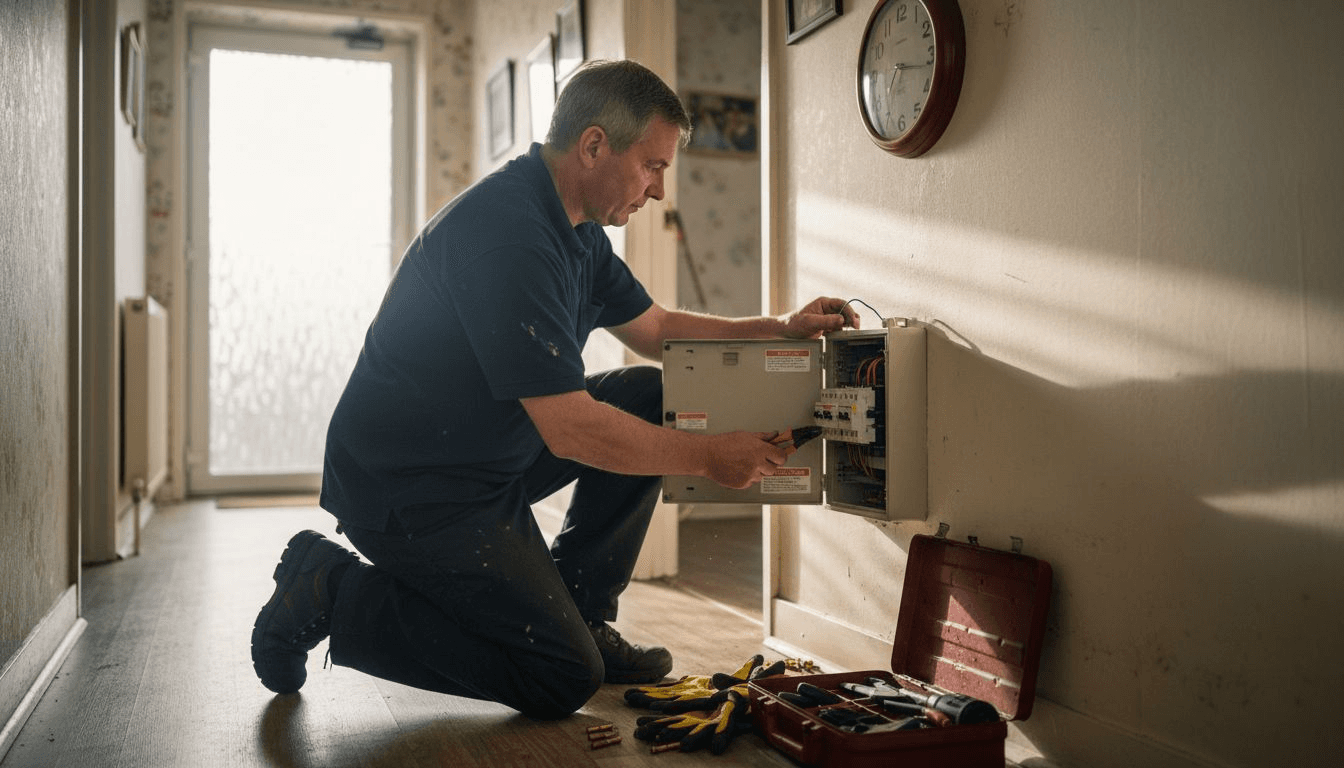
Electrical jargon feels like a foreign language when you're facing an electrician armed with clipboards and circuit testers. Yet over 40% of typical UK rental homes have at least one electrical fault detected in EICR reports, making clear communication about safety issues essential. This guide breaks down the electrical terms, EICR codes, and legal duties you need to keep your East Sussex home safe and compliant.
Table of Contents
- Introduction To Home Electrical Terminology And EICR
- Key Home Electrical Terms Every Homeowner And Landlord Should Know
- Understanding EICR Reports: Codes, Classifications, And Their Significance
- Legal Requirements And Compliance For Landlords In East Sussex
- Common Electrical Faults Detected In Domestic Properties And Their Risks
- Inspection Frequency, Qualified Professionals, And The Inspection Process
- Practical Steps For Homeowners And Landlords Post-EICR
- Common Misconceptions About Home Electrical Safety And EICR
- Summary And Next Steps For Electrical Safety In Homes
- Protect Your East Sussex Home With Trusted Electrical Services
- Frequently Asked Questions About Home Electrical Terminology And EICR
Key Takeaways
| Point | Details |
|---|---|
| Electrical terminology matters | Understanding terms like RCD, consumer unit, and earthing ensures clear communication with electricians and prevents misunderstandings during safety work. |
| EICR codes signal urgency | Fault codes C1, C2, C3, and FI classify electrical dangers from immediate risk to advisory, guiding your repair priorities and legal obligations. |
| Landlords face strict duties | English law requires rental property EICRs every 5 years with penalties reaching £30,000 for non-compliance, plus tenant safety responsibilities. |
| Common faults endanger lives | Overloaded circuits, damaged wiring, and poor earthing create fire and shock hazards found in nearly half of inspected rental homes. |
Introduction to Home Electrical Terminology and EICR
Your home's electrical system speaks its own technical language, and knowing the basics transforms confusing contractor conversations into productive safety discussions. Terms like consumer unit, RCD, circuit breaker, earthing, and bonding form the foundation of every electrical conversation you'll have about your property.
An Electrical Installation Condition Report (EICR) is a formal inspection and testing report recording safety status and compliance per UK wiring rules, mandatory every 5 years for rented properties. This comprehensive document assesses whether your electrical installation meets current safety standards, identifies potential hazards, and rates any faults found during testing.
UK regulations place clear responsibilities on property owners and landlords. The Electrical Safety Standards in the Private Rented Sector (England) Regulations 2020 requires landlords to ensure electrical installations remain safe throughout tenancies. For domestic electricians in East Sussex, conducting EICRs means systematically checking circuits, protective devices, and connections against British Standard BS 7671.
EICRs protect occupants from electrical fires, shocks, and other hazards while providing legal proof of compliance. Understanding Electrical Installation Condition Reports in Hastings helps you grasp why regular inspections matter beyond ticking regulatory boxes.
Key reasons EICRs matter for homeowners and landlords:
- They identify hidden dangers before accidents occur
- They satisfy legal requirements for rental properties
- They provide documentation for insurance and property transactions
- They guide necessary upgrades for aging electrical systems
- They establish baseline safety records for future comparisons
Key Home Electrical Terms Every Homeowner and Landlord Should Know
Your consumer unit serves as mission control for your home's electricity, housing all circuit breakers and protective devices in one central location. You'll usually find this metal box near your electricity meter, often called a fuse box though modern versions use circuit breakers instead of old-style fuses.
Residual Current Devices (RCDs) act as your electrical safety net, cutting power within milliseconds when they detect current leaking to earth through a fault or human contact. Circuit breakers protect individual circuits from overload and short circuits by automatically disconnecting power when current exceeds safe levels. While circuit breakers guard against overcurrent, RCDs specifically prevent electric shock and fire from earth faults.
Earthing creates a safe path for fault current to flow into the ground rather than through people or flammable materials. Bonding electrically connects metalwork like pipes, radiators, and structural steel to earth, preventing dangerous voltage differences between touchable metal parts. Together, earthing and bonding form your primary defense against electric shock in fault conditions.

Knowing these terms helps you understand electrician recommendations during home electrical systems and upgrades. When an electrician mentions upgrading your consumer unit or installing additional RCD protection, you'll grasp why these improvements matter for safety.
Pro Tip: Before meeting with an electrician, photograph your consumer unit and note any circuit labels. This preparation helps you ask specific questions about your existing setup and understand proposed changes more clearly.
Common electrical terms you'll encounter:
- Live conductor: Carries current to appliances and lights, typically brown in modern wiring
- Neutral conductor: Returns current to the source, typically blue
- Protective conductor: The earth wire, typically green and yellow striped
- Ring final circuit: A wiring method common in UK homes where cables loop from the consumer unit and back
- Spur: A branch cable feeding a single socket from a ring circuit
- Isolation: Safely disconnecting electrical supply before work begins
Understanding EICR Reports: Codes, Classifications, and Their Significance
EICR reports classify every fault using a specific code that tells you exactly how urgently repairs are needed. These classifications remove guesswork from electrical safety decisions and help you prioritize work when multiple issues exist.
Fault code classifications explained:
- C1 (Danger present): Immediate risk requires urgent remedial work before continued use. Examples include exposed live parts, missing earthing connections, or severely damaged equipment.
- C2 (Potentially dangerous): Urgent remedial work needed to prevent potential danger under fault conditions. This includes insufficient RCD protection, inadequate bonding, or damaged cable insulation.
- C3 (Improvement recommended): Issues that don't pose immediate danger but deserve attention during routine maintenance. Think outdated wiring methods or lack of labeling.
- FI (Further investigation): Areas needing closer examination before classification, such as concealed cables requiring access or specialist testing.
An EICR marked 'unsatisfactory' means C1 or C2 faults exist that require rectification. Prompt repairs on C1 and C2 faults reduce risks of fires and shocks, with repairs expected within 28 days or sooner. C1 faults demand immediate action, often same-day repairs, while C2 faults need addressing within weeks.
| Code | Urgency | Typical Timeline | Common Examples |
|---|---|---|---|
| C1 | Immediate | Same day | Exposed live terminals, missing earth bonds |
| C2 | Urgent | Within 28 days | No RCD protection on sockets, damaged cables |
| C3 | Advisory | During next maintenance | Old wiring colors, missing labels |
| FI | Investigation needed | Before next inspection | Inaccessible cables, suspect connections |
Pro Tip: Request a detailed schedule of test results alongside your EICR certificate. These measurements provide valuable baseline data for tracking electrical system condition over time and help future electricians understand your installation history.
Understanding EICR importance and fault codes empowers you to make informed decisions about electrical safety investments. When you receive an EICR, read the observations section carefully and ask your electrician to explain any codes you don't understand fully.
Legal Requirements and Compliance for Landlords in East Sussex
English law places strict electrical safety obligations on landlords through regulations that came into force in 2020. Landlords must obtain an EICR before new tenancy and renew at least every 5 years, with penalties up to £30,000 for violations. These rules apply to all private rented properties in England, including houses in multiple occupation, assured tenancies, and licenses to occupy.
Your legal duties as a landlord include:
- Arranging EICR inspections at least every 5 years by a qualified electrician
- Providing copies to existing tenants within 28 days of inspection
- Giving EICR copies to new tenants before occupation begins
- Supplying copies to local authorities within 7 days if requested
- Completing remedial work identified in unsatisfactory reports
Local authorities enforce these regulations through civil penalties. Failing to comply with inspection requirements, provide documentation, or complete necessary repairs can result in fines up to £30,000. Repeated violations or serious breaches may lead to prosecution, Rent Repayment Orders, or banning orders preventing you from letting properties.
"The regulations exist to protect tenants from death, injury, and loss arising from electrical faults and fires. Landlords must ensure electrical installations are inspected and tested by a qualified person at intervals not exceeding 5 years."
Beyond EICRs, landlords must ensure all electrical equipment and appliances supplied with the property remain safe. This includes portable appliance testing for items like kettles, microwaves, and lamps. Maintaining detailed records of all electrical work, inspections, and repairs provides essential evidence of compliance.
Working with experienced domestic electrician services helps you stay ahead of legal requirements. Professional electricians guide you through compliance steps, complete necessary remedial work promptly, and keep proper documentation.
For comprehensive guidance on your legal obligations, review the UK electrical safety standards guidance published by the Department for Levelling Up, Housing and Communities.
Common Electrical Faults Detected in Domestic Properties and Their Risks
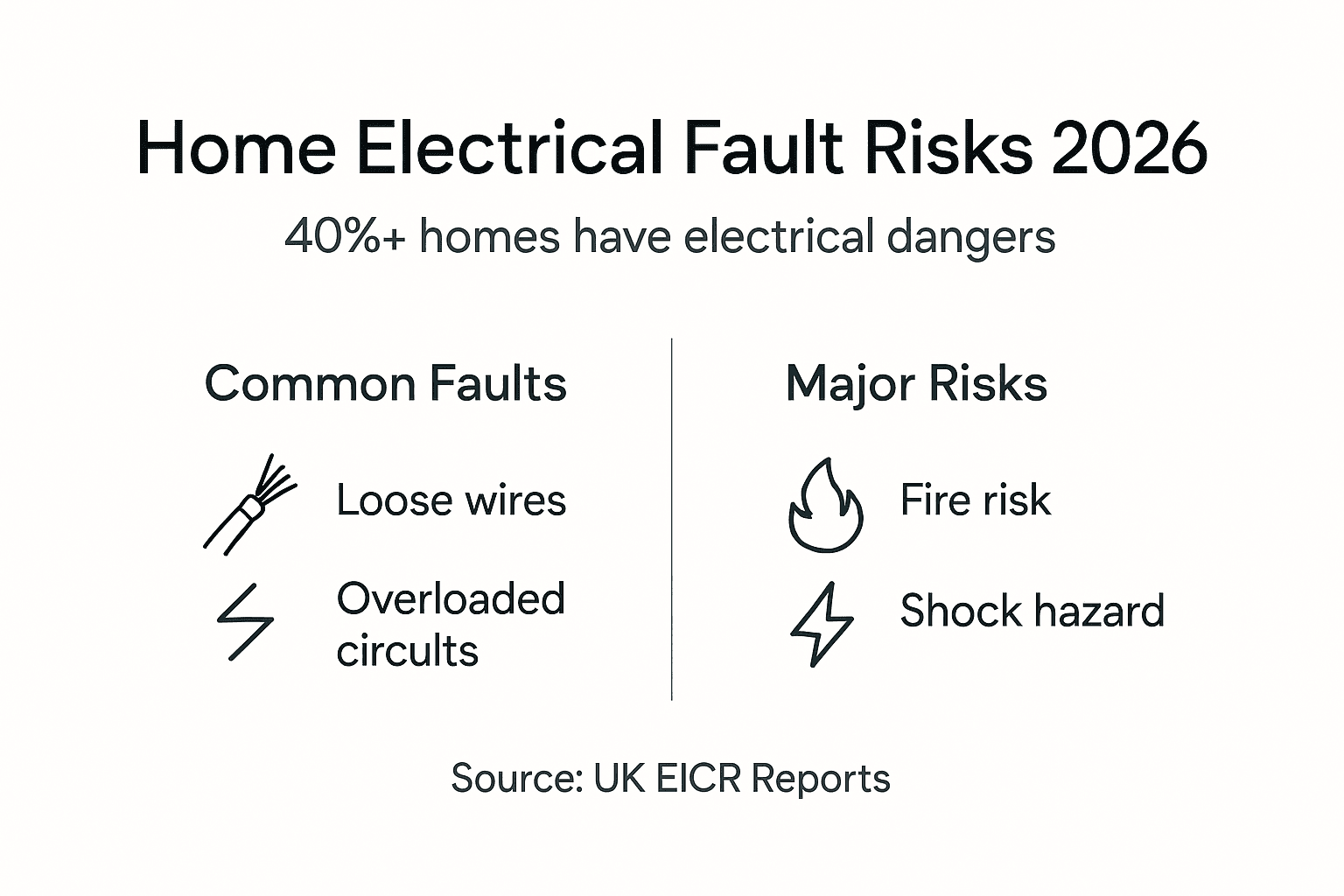
EICRs consistently uncover similar problems across UK homes, reflecting aging infrastructure and outdated safety standards. Over 40% of EICRs in UK rentals find faults such as overloaded circuits and poor earthing, posing fire and shock risks. Understanding these common faults helps you recognize warning signs and prioritize safety improvements.
Frequently identified electrical faults include:
- Inadequate earthing and bonding: Missing or corroded earth connections fail to protect against shock, especially dangerous in bathrooms and kitchens where water contact increases risk
- Lack of RCD protection: Older properties often lack RCDs on socket circuits, leaving occupants vulnerable to fatal electric shock from appliance faults
- Overloaded circuits: Too many appliances on single circuits create fire risk from overheating cables hidden in walls and ceilings
- Damaged cables and accessories: Worn insulation, cracked sockets, and broken switches expose live conductors, creating immediate shock and fire hazards
- DIY electrical work: Poorly executed alterations bypass safety requirements, introducing hidden dangers that professional testing reveals
- Obsolete wiring: Systems installed before 1970 lack modern safety features and deteriorate with age, increasing failure probability
Electrical fires cause approximately 20,000 incidents annually in England, many traceable to faults that EICRs would identify. Electric shock kills around 30 people each year in the UK, with many more suffering serious injuries from preventable faults.
Ignoring identified faults gambles with lives and property. Fire damage destroys homes, displaces families, and creates enormous financial losses. Electric shock causes burns, cardiac arrest, and long-term neurological damage. Beyond physical harm, landlords face legal liability for tenant injuries resulting from known but unrepaired electrical faults.
Review the electrical safety checklist to identify warning signs between formal inspections. Burning smells, flickering lights, hot outlets, and tripping breakers all signal problems requiring immediate professional attention.
Inspection Frequency, Qualified Professionals, and the Inspection Process
EICRs must be carried out every 5 years for rented homes, while owner-occupied homes are advised at 10-year intervals by qualified electricians. These timelines ensure electrical installations receive regular safety reviews before deterioration creates hazards. Properties with swimming pools, locations exposed to corrosive environments, or extensive electrical alterations may need more frequent inspections.
Only competent electricians with appropriate qualifications should conduct EICRs. Look for electricians registered with government-approved schemes like NICEIC, NAPIT, or ELECSA. These schemes verify electricians meet competency standards, hold proper insurance, and follow industry codes of practice. Registered electricians access technical support and undergo regular assessments to maintain their status.
The EICR inspection process follows systematic procedures:
- Initial assessment: The electrician reviews property details, previous reports, and any known electrical issues to plan the inspection scope
- Visual examination: Thorough inspection of accessible electrical equipment, wiring, and protective devices identifies obvious defects, damage, or non-compliances
- Testing: Specialized equipment measures circuit continuity, insulation resistance, earth fault loop impedance, and RCD operation to verify safety performance
- Documentation: Results are recorded on standard forms detailing circuits tested, measurements obtained, and any defects classified by code
- Report delivery: You receive a certificate showing overall assessment plus detailed schedules listing all observations and test results
Typical EICR inspections take 3 to 4 hours for average homes, longer for larger properties or complex installations. Electricians need access to all areas containing electrical equipment, so clear lofts, cupboards, and rooms before the appointment.
Qualifications to verify when hiring an electrician:
- Registration with NICEIC, NAPIT, ELECSA, or equivalent competent person scheme
- City & Guilds 2391 inspection and testing qualification or equivalent
- Current public liability insurance coverage
- Experience conducting EICRs on similar property types
Understanding the EICR inspection process and timing helps you prepare for inspections and know what to expect. Schedule EICRs well before legal deadlines to allow time for any necessary remedial work without rushing.
Practical Steps for Homeowners and Landlords Post-EICR
Receiving your EICR marks the beginning of action, not the end. Review the report carefully, focusing first on the overall assessment shown on the Electrical Installation Condition Report certificate. An 'unsatisfactory' outcome means C1 or C2 faults need immediate attention before you can achieve compliance.
Prioritize repairs systematically:
- C1 faults first: Address danger present issues immediately, often on the same day as identification
- C2 faults next: Schedule urgent remedial work within the 28-day guideline, prioritizing issues in high-risk areas like bathrooms
- FI investigations: Arrange necessary access or specialist testing to determine actual fault severity
- C3 improvements: Plan these enhancements during routine maintenance or property upgrades
When communicating with electricians about repairs, reference specific observation numbers from your EICR. This precision ensures clear understanding and accurate quotes. Ask electricians to explain proposed solutions, why they're necessary, and how they address the identified code. Request written quotes detailing materials, labor, and completion timelines.
Pro Tip: Create a digital folder containing all electrical documents including EICRs, remedial work certificates, and equipment test records. Cloud storage ensures you never lose critical compliance documentation and simplifies sharing with tenants, buyers, or authorities.
Maintain comprehensive electrical records including:
- Original EICR certificates with all test result schedules
- Completion certificates for remedial work and upgrades
- PAT testing records for supplied appliances
- Correspondence about electrical issues and repairs
- Receipts and invoices for electrical work
Landlords must retain these records throughout tenancies and for reasonable periods afterward to demonstrate compliance if questions arise. Digital records with cloud backup prevent loss from property damage or misplacement.
Explore using your EICR effectively to maximize safety benefits beyond basic compliance. Review electrical safety tips and advice regularly to stay informed about best practices. Cross-reference findings with the electrical safety checklist to identify any items needing attention between formal inspections.
Common Misconceptions About Home Electrical Safety and EICR
Myths about electrical safety create dangerous complacency and compliance gaps. Separating facts from fiction helps you make informed decisions protecting your property and occupants.
Debunking frequent electrical safety myths:
- Myth: Only landlords need EICRs Reality: While only rental properties face legal EICR requirements, owner-occupied homes benefit equally from regular electrical safety inspections. Electrical faults don't discriminate by occupancy type.
- Myth: All EICR faults require immediate expensive repairs Reality: Only C1 and C2 codes demand prompt remedial work. C3 improvements are recommendations for gradual enhancement, not urgent safety requirements. Many C3 items cost little to address.
- Myth: I can fix electrical problems myself after an EICR Reality: Unless you're a qualified electrician, DIY electrical repairs often violate building regulations, invalidate insurance, and create new hazards. Always use competent professionals for repairs beyond simple tasks like changing light bulbs.
- Myth: New homes don't need electrical inspections Reality: Even recently built properties develop faults from poor workmanship, damage during occupancy, or changes since construction. Regular inspections ensure ongoing safety regardless of property age.
- Myth: Passing one EICR means my electrics are safe forever Reality: Electrical installations deteriorate over time through normal use, environmental factors, and aging materials. Five-year inspection intervals exist precisely because yesterday's safe system may develop tomorrow's fault.
Understanding common EICR myths and facts prevents costly mistakes. When friends or online forums suggest shortcuts or challenge professional recommendations, trust qualified electrician advice over anecdotal opinions.
Summary and Next Steps for Electrical Safety in Homes
Mastering home electrical terminology transforms you from passive property owner into informed safety advocate. Understanding terms like consumer unit, RCD, earthing, and bonding enables productive electrician conversations and helps you evaluate proposals critically. Knowing EICR fault codes guides repair priorities and ensures you address genuine dangers promptly.
Legal compliance protects more than your wallet. The five-year EICR requirement for rental properties exists because electrical installations deteriorate and safety standards evolve. Regular inspections catch problems before they cause fires, shocks, or deaths. Even owner-occupied properties benefit from ten-year inspection intervals recommended by safety organizations.
EICRs identify common faults like inadequate earthing, missing RCD protection, and overloaded circuits found in over 40% of rental properties. These aren't abstract technical issues but real hazards that kill dozens and injure thousands annually. Prompt repairs, especially for C1 and C2 faults, directly prevent tragedies.
Take these essential actions now:
- Schedule your next EICR if more than five years have passed since the last inspection
- Review existing EICRs and arrange overdue remedial work immediately
- Organize electrical documentation into accessible digital records
- Contact qualified, registered electricians for all electrical work and inspections
- Educate tenants about electrical safety basics and reporting procedures
Electrical safety demands ongoing attention, not one-time compliance exercises. Stay informed about evolving standards, maintain relationships with trusted electricians, and address issues promptly when they arise.
Protect Your East Sussex Home with Trusted Electrical Services
Your home's electrical safety deserves professional attention from experienced local electricians who understand East Sussex properties inside out. Whether you need a comprehensive EICR, urgent fault repairs, or expert guidance on compliance requirements, specialized domestic electrical services ensure your property meets current safety standards.

We provide thorough EICR services in Hastings and East Sussex with detailed testing, clear reporting, and practical remedial advice. Our qualified team handles everything from routine inspections to complex domestic electrical repairs and maintenance, giving you peace of mind that your electrical installation protects occupants properly. Learn more about EICRs and how regular professional inspections safeguard your property investment and comply with landlord obligations throughout East Sussex.
Frequently Asked Questions About Home Electrical Terminology and EICR
What is the difference between RCD and circuit breaker?
RCDs detect current leaking to earth and disconnect power within milliseconds to prevent electric shock, while circuit breakers protect against overload and short circuits by monitoring total current flow in cables. Modern consumer units combine both technologies, with RCDs protecting groups of circuits and individual circuit breakers for each final circuit. You need both types of protection for comprehensive electrical safety.
How soon must landlord repairs be done after C1 or C2 faults?
C1 faults classified as danger present require immediate remedial action, typically same-day repairs before the property remains occupied safely. C2 potentially dangerous faults need urgent attention within 28 days to prevent danger under fault conditions. Failure to complete these repairs within recommended timelines exposes you to enforcement action and penalties up to £30,000.
Are owner-occupiers required by law to get an EICR?
No legal requirement mandates EICRs for owner-occupied homes in England, though Electrical Safety First recommends inspections every 10 years. Some mortgage lenders and insurers may require EICRs for older properties or as conditions of coverage. Even without legal obligation, regular inspections identify hazards protecting your family and property.
Can I personally do electrical repairs after an EICR report?
Electrical installation work in homes must comply with Building Regulations Part P, requiring either a competent person scheme member or local authority notification. Most EICR repairs involve notifiable work that DIY attempts cannot legally complete without proper certification. Use qualified electricians for all repairs beyond simple tasks like replacing like-for-like accessories to ensure safety and compliance.
How often should rental property electricals be inspected?
English law requires rental property EICRs at least every 5 years and before new tenancies begin. Some properties in harsher environments or with extensive alterations may need more frequent inspections based on electrician recommendations. Never exceed the 5-year maximum interval to maintain legal compliance and tenant safety. For more EICR FAQs, visit our detailed guide covering inspection processes, costs, and requirements.